Better Interviews. Better Outcomes.
Benchmark CI-AT
Trauma-Informed Interviewing
Using the Cognitive Interview Adapted to Trauma in Sexual Assault Investigations

Science-based. Victim-centered. Evidence-Focused.
Navigating sexual assault investigations is complex.
Understanding how severe trauma impacts the brain, behavior, and memory is not optional.
It can be the difference between a case that moves forward and one that falls apart.
It doesn’t require malice to do great harm.
Fewer than half of sexual assault victims report to police. That matters. Because when victims do come forward, how they are received shapes everything that follows.
The Stakes.
Sexual assault cases are among the most challenging to investigate.
Without a clear understanding of trauma, we risk damaging the most important part of the case: the victim.
Victims face many real psychological, social, and cultural barriers to reporting. When they disclose, they are often misunderstood.
They may be met with:
Disbelief
Shaming
Disgust
Blame

These responses do more than harm the victim.
They weaken investigations.
They compromise prosecutions.
They reduce accountability.
They lead to more victims.

Trauma Changes How the Brain Processes Experiences and Stores Information.
Victims may recall some details clearly, while other parts are:
Fragmented
Disorganized
Temporarily inaccessible
When interviewers do not understand this, they:
Ask the wrong questions
Interrupt recall
Suppress memory retrieval
They unintentionally shut down victims and shut out the very information needed.
The Solution:
Cognitive Interview Adapted to Trauma (CI-AT).
Built upon Dr. Ron Fisher’s research in cognitive interviewing & Dr. Jim Hopper’s research on the neurobiology of trauma and sexual assault.[1] , [2]
| Feature | Traditional Victim Interview | Enhanced Cognitive Interview | CI-AT |
|---|---|---|---|
| Assumes linear timeline | ✔ | X | X |
| Assumes complete details recalled immediately | ✔ | X | X |
| Assumes only full consistency equals credibility | ✔ | X | X |
| Interruptions, redirections, leading questions; pushing for peripheral details and time sequencing | ✔ | X | X |
| Begins with free recall, controlled by victim | X | ✔ | ✔ |
| No leading questions or pressure to guess, fill in gaps, or recall exact time sequencing | X | ✔ | ✔ |
| Accepts fragmentary memories | X | ✔ | ✔ |
| Focused recall of sensations, feelings, thoughts, resulting in richly detailed memories | X | X | ✔ |
| Training in neurobiology of trauma and common responses (e.g., freezing, habits, dissociation, tonic immobility) so critical details aren’t missed | X | X | ✔ |
| Training on trauma and memory so expectations are realistic and critical details aren’t missed | X | X | ✔ |
Better interviews. Better information. Better outcomes.
The 6 Phases of CI-AT are designed specifically to:
Reduce retraumatization
Create an atmosphere of trust
Enhance accurate memory recall without increasing error
Avoid practices that suppress memory retrieval
Strengthen corroboration opportunities
Maximize the collection of accurate information while reducing interviewer contamination

Phases of Benchmark CI-AT
-
01.
Introduction
-
02.
Free Recall
-
03.
Focused Recall of Sensations, Thoughts & Feelings
-
04.
Focused Recall of Event Segments
-
05.
Final Verification
-
06.
Conclusion
The Training Experience.
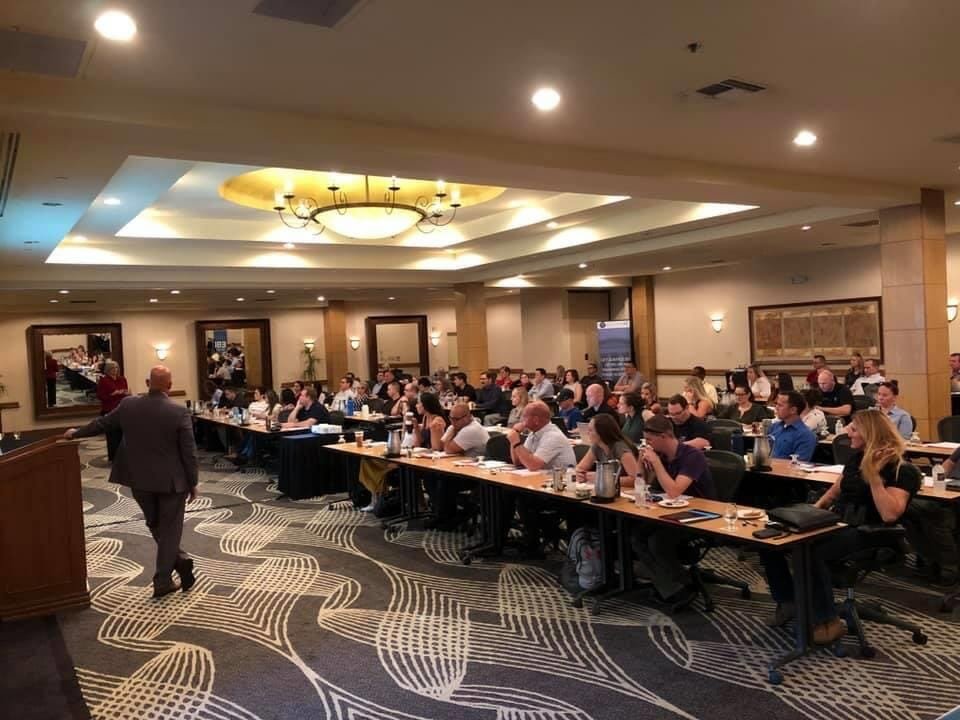
This is a four-day, immersive training. Participants do not just learn the concepts. They apply them.
Throughout the course:
Real-world instruction by subject matter experts
Guided discussion
Practical skill-building
The course culminates in:
Scenario-Based Interviews Using Skilled Actors
Participants conduct CI-AT interviews in real time and receive coaching from instructors within a supportive environment.
Upcoming Trainings
-

Dallas, TX Training
May 26-29, 2026
-

Phoenix, AZ Training
Dec. 14-17, 2026
Limited Enrollment!